UGC marketing
What is UGC and why does it convert better than studio ads?
Real people, useful demonstrations and a relatable voice. Discover how UGC can turn attention into trust and how to test whether it drives more sales for your brand.
FindCollabs Team · October 9, 2026 · 6 min
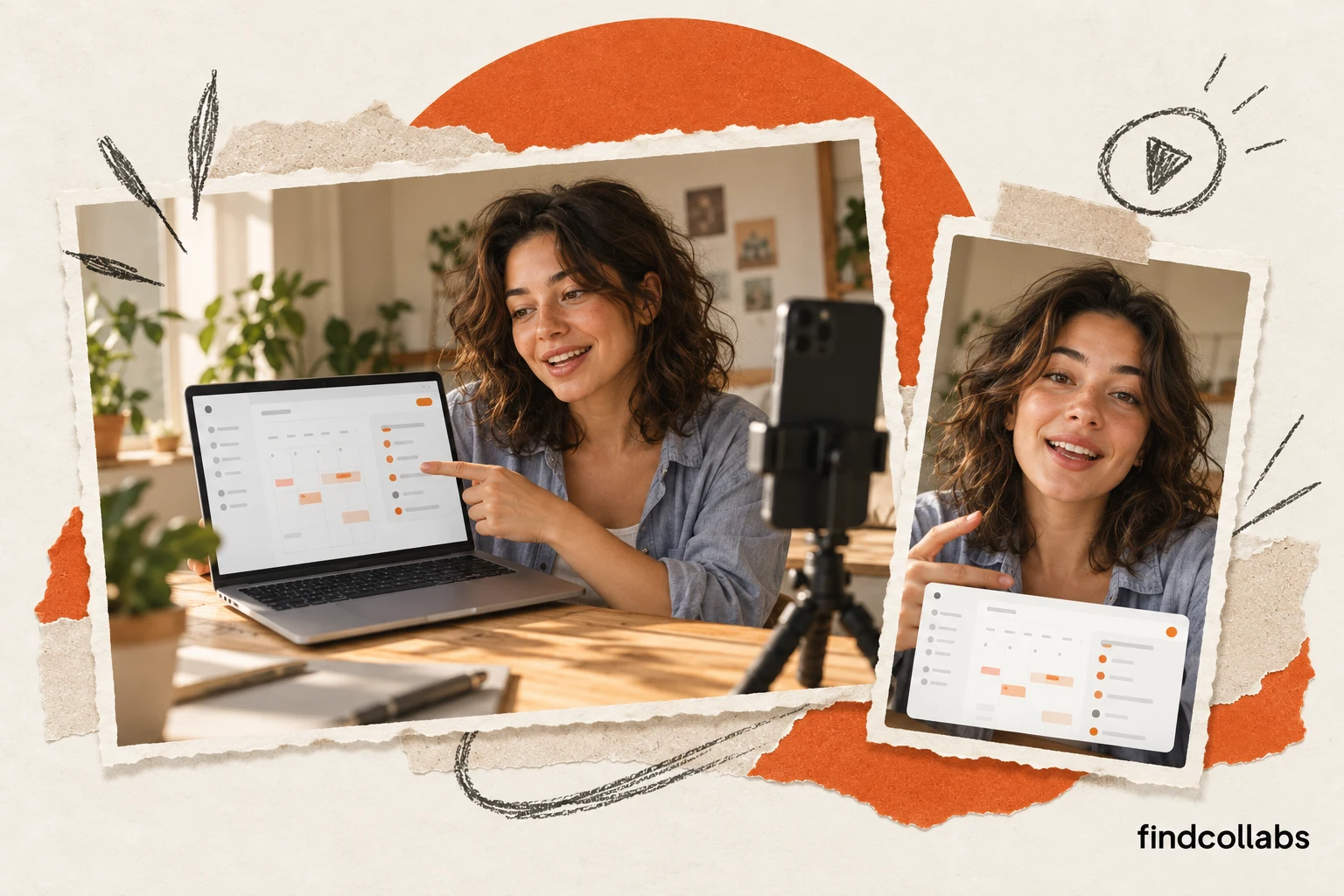
Imagine two videos from the same brand. In the first, a product rotates against a perfect backdrop while a voice promises quality. In the second, someone shows how they use it on an ordinary morning, explains what they liked and answers a question they had before buying.
The first may impress. The second may help someone decide. This is where UGC becomes valuable: it brings the product closer to the life of the person considering it.
But there is an important distinction: UGC can convert better; it does not always do so. Results depend on the product, message, audience, offer and experience after the click. Here is what makes this format useful and how to assess whether it works for your brand.
What is UGC?
UGC stands for User-Generated Content. It can be a customer photo, a review, an unboxing video or a demonstration posted by someone who has tried a product.
In marketing, the term also describes content commissioned from creators, using a style close to a user's experience. It is worth distinguishing between two situations:
- Spontaneous UGC: a customer shares their experience on their own initiative.
- UGC-style creator content: a brand hires someone to produce photos or videos for its channels or campaigns.
A paid video can be natural, useful and honest. It should not, however, pretend to be a spontaneous recommendation. The experience presented should be genuine and the commercial relationship transparent.
Are UGC and influencer marketing the same thing?
Not exactly. In an influencer collaboration, the brand often seeks access to the creator's audience, with the creator publishing on their own profile. In a UGC production collaboration, the main aim is to obtain content the brand can use.
A good UGC creator therefore does not need thousands of followers. They need to communicate clearly, understand the product and create a credible demonstration. The same person can do both kinds of work; the brief should clarify whether the deliverables include only the files or publication as well.
Why can it convert better than a studio ad?
1. It helps the audience recognize their own situation
An ordinary kitchen, a rushed routine or a specific question can bring the message closer to the viewer. People can imagine the product in their everyday life. That identification is a campaign hypothesis, not a guarantee of sales.
2. It shows what a description cannot explain
A backpack may have an excellent list of features. A video showing a laptop, charger and bottle fitting inside answers a more practical question: “Will it work for what I need?”
The same applies to a garment's size, assembling an accessory or the steps in an app. The more concrete the demonstration, the more useful it is for assessing the product.
3. It fits the language of the feed
In its creative best practices, TikTok recommends featuring people and using a less polished style that fits the platform's content. It also recommends ongoing testing: creative guidance does not prove that every UGC video outperforms studio production.
4. It creates room to answer objections
“Is it difficult to use?”, “Does it take up much space?”, “What comes in the box?” A creator can build a video around one of these questions. Instead of repeating adjectives about the brand, they offer information that helps someone move forward in their decision.
5. It allows different messages to be explored
A lightweight production can make it easier to create different openings, demonstrations and calls to action. The advantage is the chance to learn: one version explains a benefit, another answers a question and another shows the product in use. The real cost should include production, usage rights and revisions.
When does studio production still make sense?
Studio production is useful when a brand needs precise lighting control, visual details that are difficult to capture or consistent art direction. It can be the right choice for a launch, a campaign image or a technical demonstration.
The formats can also work together. A carefully crafted photo introduces the product; a creator video shows how to use it. The format should serve the campaign's message and objective.
An example of UGC that helps people decide
Imagine a backpack brand showing a model for daily commuting. Instead of asking the creator to say it is “amazing”, the brand could suggest this structure:
- Opening: “What I carry in my backpack on a day between the office and the gym.”
- Demonstration: put items into the compartments without cuts that hide the available space.
- Useful detail: show how it sits on the back and how to access the most-used pocket.
- Next step: invite viewers to check the dimensions and colors on the product page.
This is a sample script, not a real testimonial. The final version should reflect the creator's experience and the product's verified features.
How to prepare a good UGC brief
A useful brief provides direction without making the creator sound like they are reading an ad. Align on these points before starting:
- Objective: purchases, inquiries or visits to a specific page.
- Audience and main question: who the video addresses and what question it should resolve.
- Message: a demonstrable benefit, with accurate product information.
- Deliverables: quantity, duration, format, captions and opening variations.
- Usage: channels, period, paid ads and any content adaptations.
- Process: deadlines, included revisions and approval criteria.
Leave room for the creator's vocabulary and ideas. A collaboration can lose its natural feel when the brand dictates every pause and sentence.
How to know whether UGC converts better for your brand
Compare results through a planned test. Use the same offer and landing page and keep the audience, period and delivery conditions as comparable as possible. If the platform allows it, use an A/B test with split audiences, avoiding versions competing for the same people.
First define what counts as a conversion. A purchase, a sign-up and an inquiry are different outcomes. Then track:
- Click-through rate: helps you understand whether the ad sparks interest.
- Conversion rate: shows the proportion of visits that complete the defined action.
- Cost per acquisition: relates ad spend to conversions obtained.
- Outcome quality: order value, margin or lead quality, depending on the objective.
A video with more views may sell less. An ad with cheap clicks may attract people who do not buy. Include production costs in the overall assessment and avoid declaring a winner after just a few conversions. If there is not enough data, the result is inconclusive.
Start with a real customer question
Before choosing a camera or setting, choose the question your content will answer. Then find a creator who can address it naturally and give them the opportunity to try the product.
The combination of a relevant message, a useful demonstration and a credible experience gives UGC its potential to convert. Production only makes sense when it helps the audience understand the value of what they are seeing.
Ready to plan your first collaboration? Create a project on FindCollabs with the objective, deliverables and budget. A clear brief is a good starting point for finding the right person.
- #UGC
- #creators
- #digital marketing
- #advertising